GlitchSweep
Generative capture. The stitcher's reasoning, left on the surface.
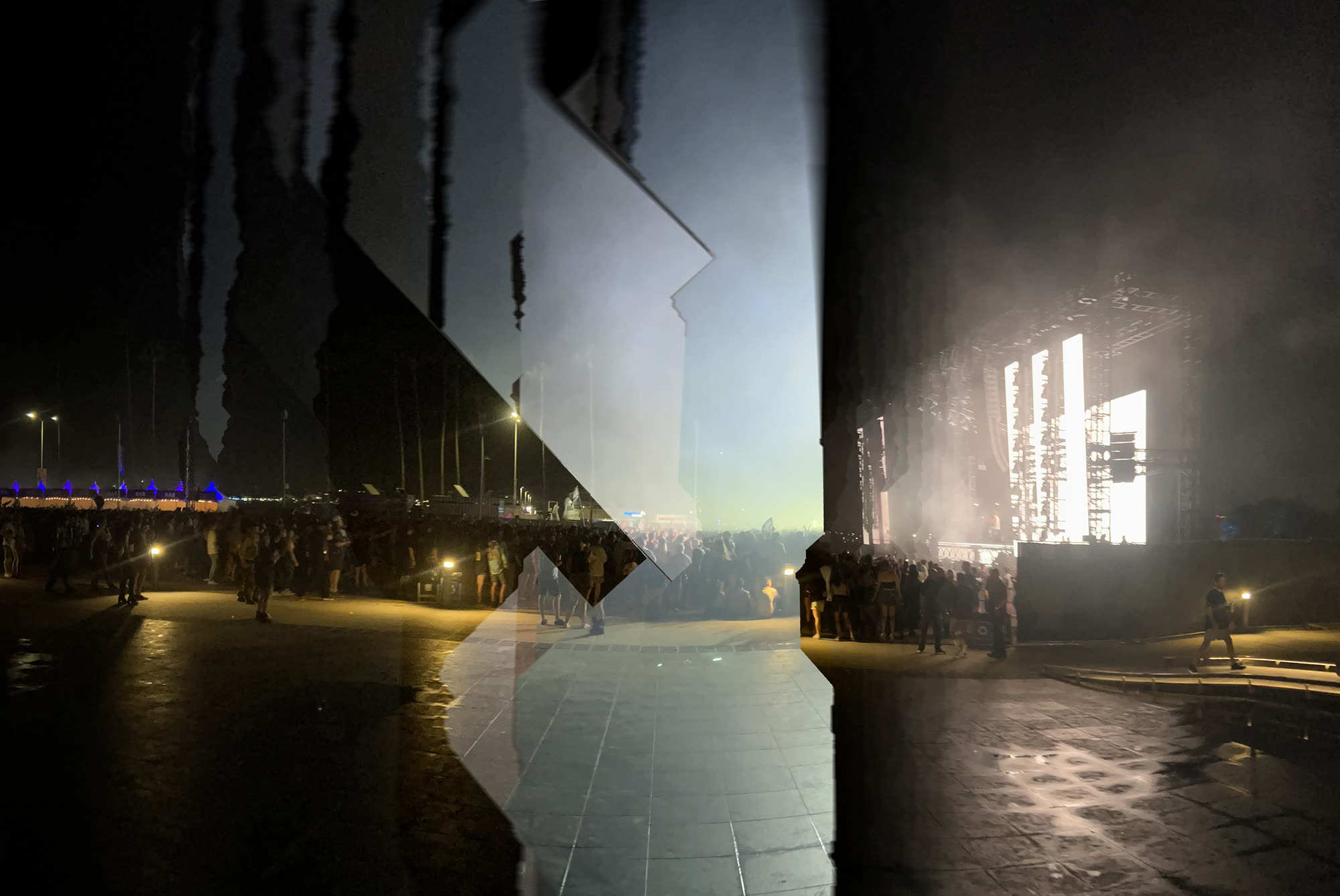
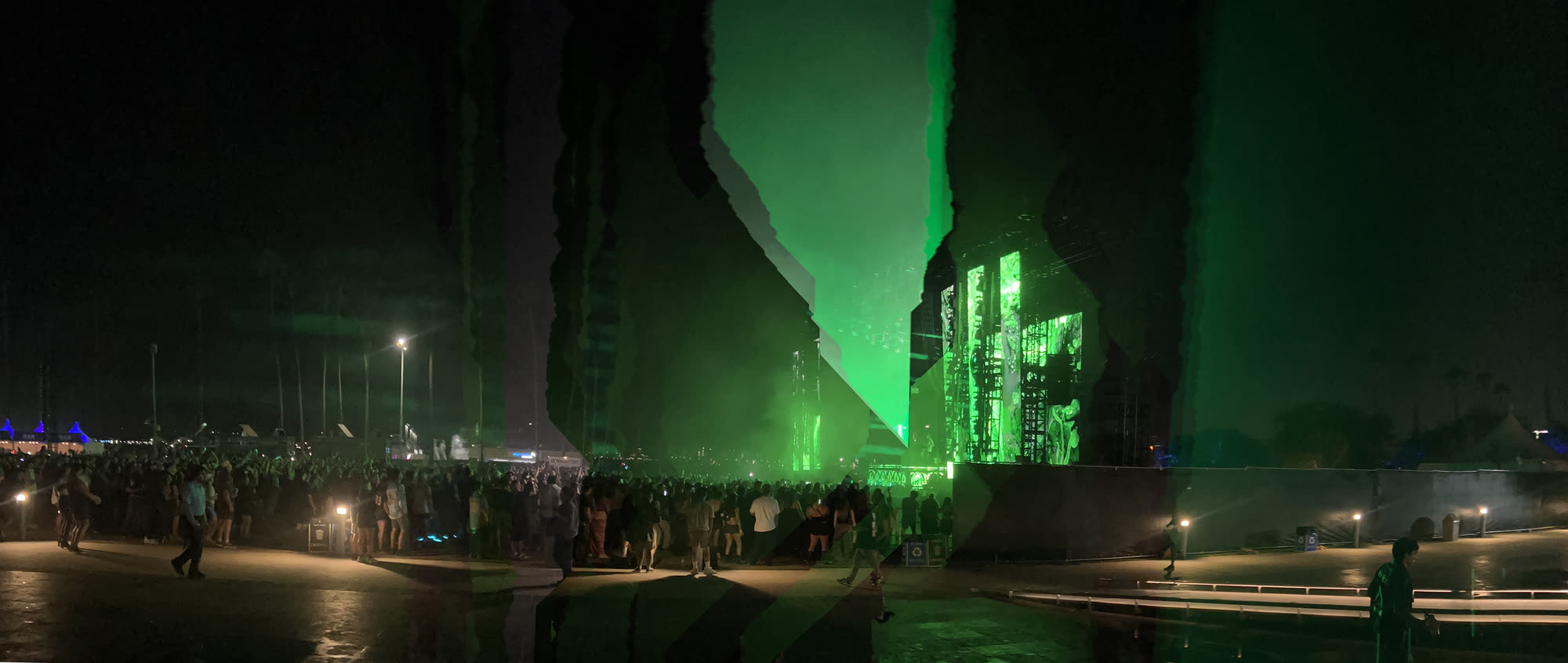
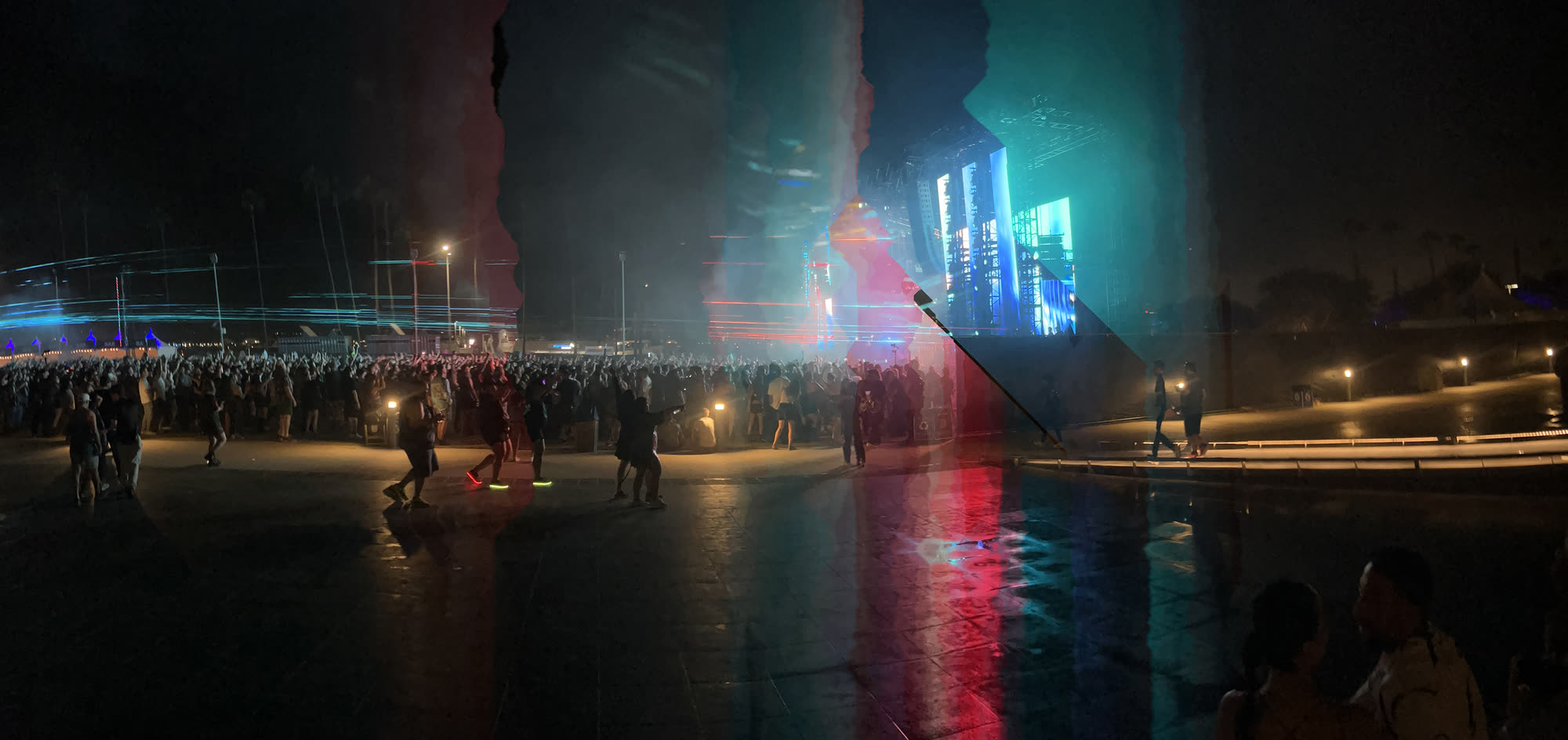
A panoramic sweep runs across a stage that is changing faster than the sweep completes.
The camera captures vertical slices under lighting states that cannot coexist. The stitcher assembles them and tries to reconcile them into one coherent scene.
It cannot. That failure is the image.
How it works
A panorama is not a photograph. It is a reconstruction, assembled from slices captured across time and stitched under the assumption that the scene held still.
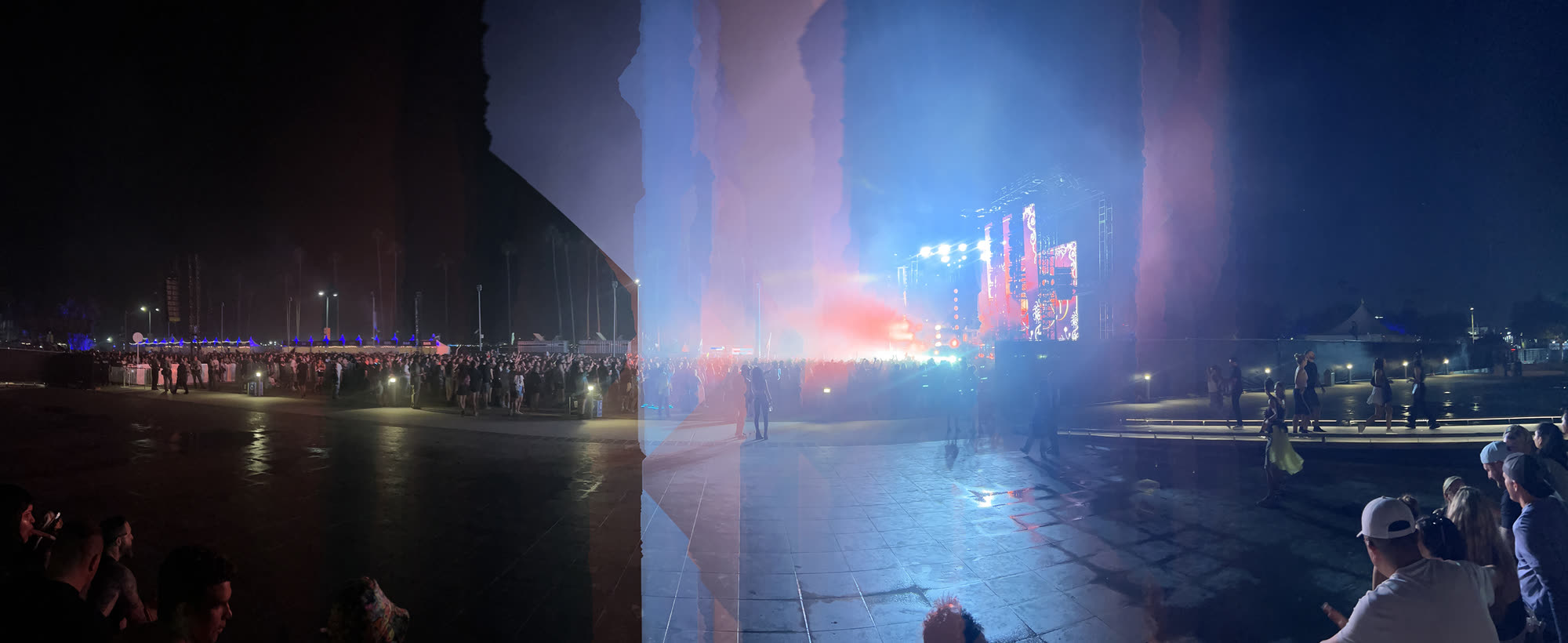
At a show, the scene does not hold still. Lighting cycles faster than the sweep, so adjacent slices carry incompatible information: different color, different intensity, different structure lit and unlit. The stitcher has no way to resolve them and no instruction to stop, so it produces its best reconciliation and leaves the seams visible.
Torn skyline. Doubled truss. Sheared crowd line. Hard color bands where two moments refuse to merge.
These are not errors corrected in post. Nothing here is composited, filtered, or generated after the fact. Every frame is a single capture, and every artifact is the algorithm's reasoning made visible on the surface.
Why it holds
Event photography records what a stage looked like. It cannot record what the stage was doing, because a single frame holds a single lighting state and the show is the transitions.
GlitchSweep records the transition itself. The tearing is time, laid sideways.
The method, stated plainly
Set a condition. Let the system generate the material. Read what comes back and decide what is worth keeping.
The photographer does not construct the image. The photographer builds the circumstance under which an interesting failure becomes likely, then exercises judgment over the output. Editing, not summoning.
Nothing in this series is repeatable. The same sweep across the same stage produces a different image every time, because the variables (lighting cycle phase, sweep speed, crowd movement, atmospheric haze) never align twice. Working this way means giving up control of the output and keeping control of the conditions.
Forty-plus frames from a single night. A small number are worth keeping. That ratio is the work.